
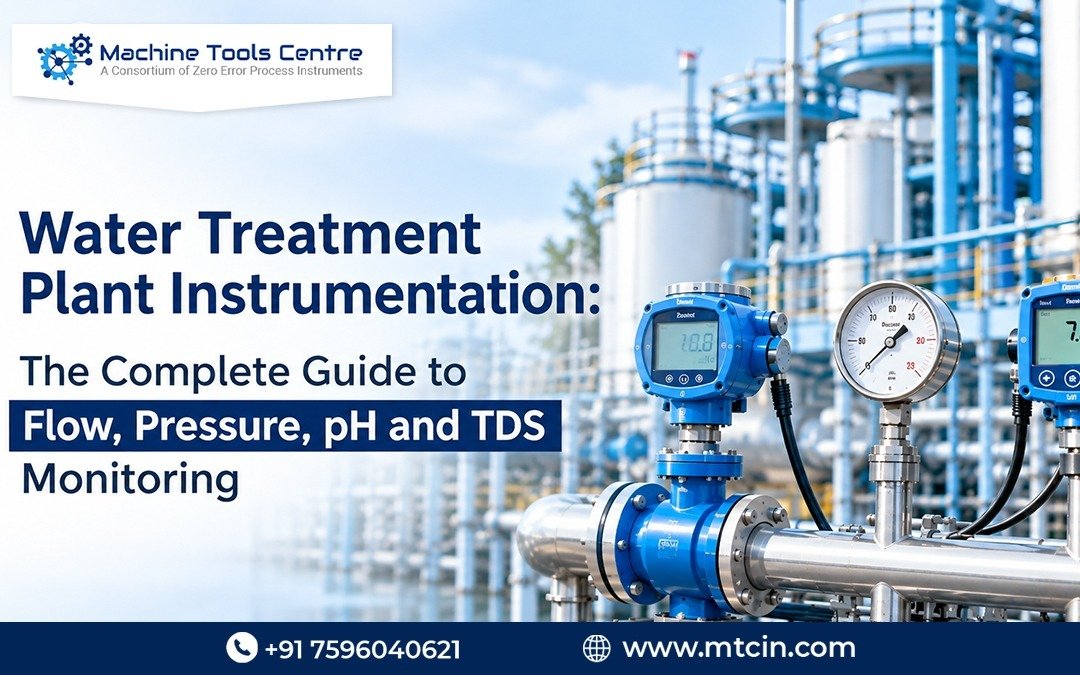
Clean water does not happen by chance. Behind every reliable water treatment plant (WTP) and sewage treatment plant (STP) is a network of instruments that measure, record and control the process around the clock. Without accurate data, operators are guessing, and guesswork leads to wasted chemicals, higher energy bills, equipment damage and compliance failures.
This guide explains the key instruments used in water and wastewater plants, what they measure, and how to choose the right ones for your facility.
Why Instrumentation Matters in Water Treatment
Every stage of treatment, from raw water intake to final discharge, depends on measurable parameters. Flow rate decides how much chemical to dose. Pressure shows whether pumps, filters and membranes are working properly. pH and TDS tell you whether the water meets quality standards.
Good water treatment plant instrumentation gives you three things: control over the process, visibility into plant performance, and proof of compliance for regulators and auditors.
Flow Measurement: The Heart of the Plant
Flow is usually the first parameter a plant needs to measure accurately. A WTP flow meter helps operators track how much water enters the plant, moves between treatment stages and leaves for distribution.
The most common types include:
- Electromagnetic flow meters: Ideal for conductive liquids. They have no moving parts, cause almost no pressure loss and stay accurate over long periods.
- Ultrasonic flow meters: Useful for large pipes and for retrofits, since clamp-on versions can be installed without cutting the pipe.
- Turbine and mechanical meters: Economical for clean water lines, though they need more maintenance.
Accurate flow data lets you dose chlorine and coagulants correctly, balance loads between filters and spot leaks early.
Bulk Water Meters: Measuring Large Volumes
Where large quantities of water are transferred, such as at plant inlets, industrial campuses, housing societies and municipal supply points, a bulk water meter is the right tool. These meters are built for high flow rates and large pipe sizes, and they provide the volume totals needed for billing, auditing and water balance studies.
When selecting a bulk water meter, consider pipe diameter, flow range, accuracy class, installation conditions and the quality of the water passing through. A meter that is too large will under-read at low flows, and one that is too small will create pressure loss and wear out sooner.
Water Pressure Monitoring
Pressure is a quiet but critical indicator of plant health. Effective water pressure monitoring helps you:
- Detect clogged filters or fouled membranes through rising differential pressure
- Protect pumps from dry running or overpressure
- Identify leaks and bursts in pipelines
- Maintain steady supply across the distribution network
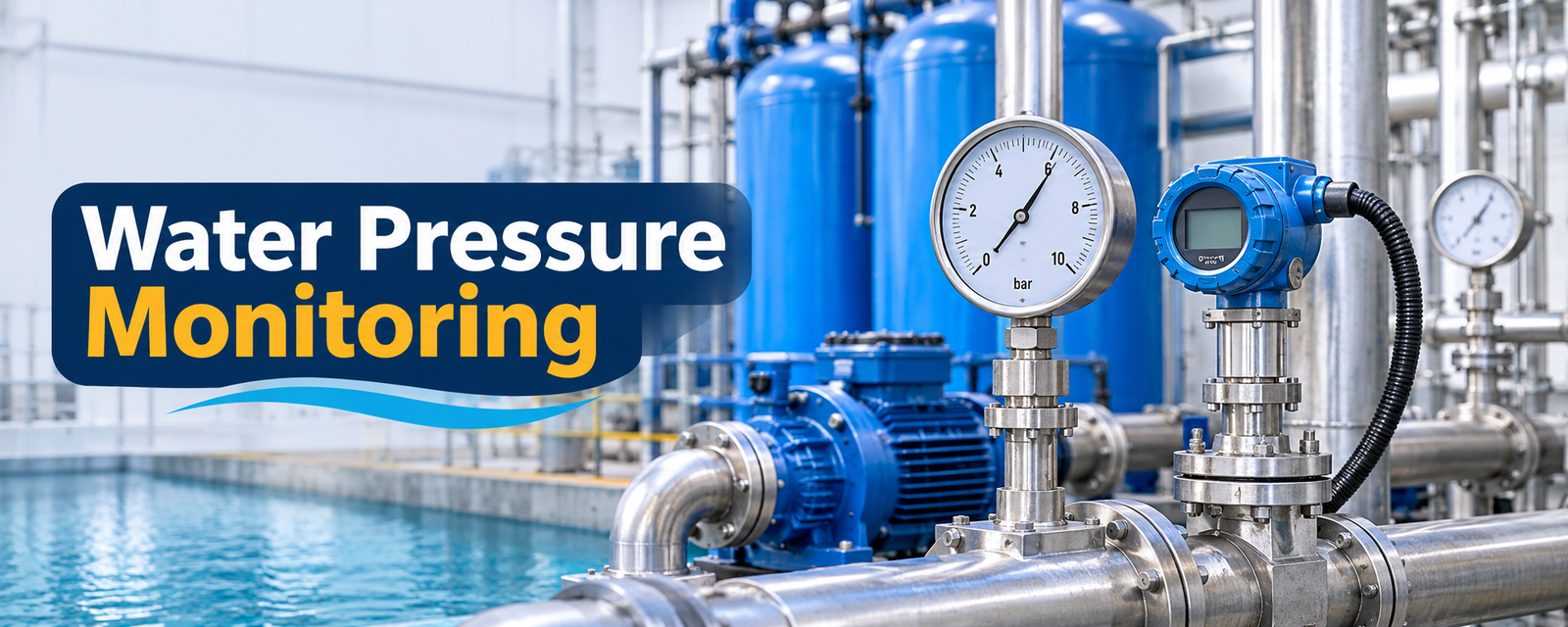
Pressure transmitters, gauges and pressure switches are typically placed at pump suction and discharge points, across filters and RO membranes, and at key network nodes. Transmitters feed continuous data to a control system, while switches provide dependable alarms and cut-offs when limits are crossed.
pH and TDS Analyzers: Watching Water Quality
Physical measurements tell you how the plant is running. Analytical instruments tell you what the water actually contains.
pH analyzers monitor acidity and alkalinity. Correct pH is essential for effective coagulation, disinfection and corrosion control. In an STP, it also protects biological treatment, since microbes work well only within a narrow pH range.
TDS analyzers measure total dissolved solids, usually through conductivity. They are vital for RO plants, boiler feed water, cooling towers and drinking water lines, where rising TDS can signal membrane failure or contamination.
A reliable pH and TDS analyzer setup should include regular calibration, clean sensors and temperature compensation, because drift and fouling are the most common causes of bad readings.
STP Instrumentation: Monitoring Sewage Treatment
Sewage treatment plants face tougher conditions, including solids, grease and variable loads. Sound STP instrumentation usually includes:
- Flow meters at the inlet and treated water outlet
- Level sensors in equalization tanks and sumps
- pH analyzers at the inlet and after treatment
- Dissolved oxygen sensors in aeration tanks
- Pressure instruments on blowers and pumps
Together, these protect the biological process, reduce power use in aeration and help the plant meet discharge norms consistently.
How to Choose the Right Instruments
Before buying, keep these points in mind:
- Define the application: Raw water, treated water, sewage and RO reject all behave differently.
- Check the process conditions: Temperature, pressure range and fluid properties affect which instrument will last.
- Match the accuracy to the need: Billing and compliance points need higher accuracy than general monitoring.
- Plan for integration: Look for 4-20 mA, Modbus or other outputs that connect to your PLC or SCADA.
- Think about maintenance: Choose instruments that are easy to calibrate and service.
- Buy from a trusted supplier: Product quality and after-sales support matter as much as the specification.
Sourcing Reliable Instruments
Finding the right mix of flow meters, pressure instruments and analyzers from a dependable source can save a lot of time and rework. Industrial instrumentation suppliers like MTC (mtcin.com) offer a range of instruments for process and utility applications, so you can compare options and match them to your plant’s needs.
Final Thoughts
A well-instrumented plant runs more efficiently, protects its equipment and stays on the right side of regulations. Whether you are upgrading an existing WTP, commissioning a new STP or simply adding a bulk water meter, the goal is the same: accurate, dependable data at every critical point.
Start by mapping your process, identify where measurement gaps exist, and invest in quality instruments that fit your conditions. The savings in chemicals, energy and downtime will quickly outweigh the cost.

