
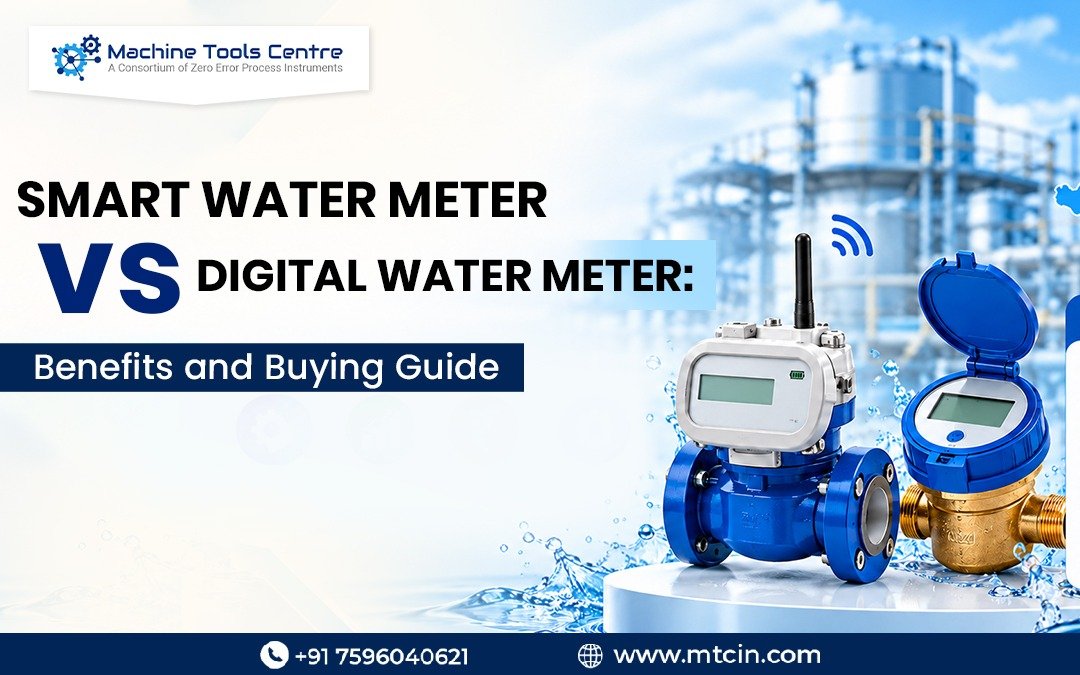
Water management has become increasingly important for homes, commercial buildings, and industrial facilities. Monitoring water consumption helps identify unusual usage, reduce wastage, and manage water expenses more effectively. This is where modern water measurement technology can make a difference. A smart water meter and a digital water meter are two popular options for measuring water consumption, but they offer different features and levels of monitoring.
Understanding their differences, benefits, and applications can help you choose the right solution for your requirements. This guide explains how these meters work and what to consider before making a purchase.
What Is a Smart Water Meter?
A smart water meter is an advanced measuring device that records water consumption and can transmit usage data through communication technologies such as wireless networks or cellular connectivity. Depending on its features, it may allow users to monitor consumption remotely without manually reading the meter.
One of the main advantages of a smart water meter is its ability to provide more frequent usage information. This can help homeowners, property managers, and utility providers identify unexpected consumption patterns and investigate potential leaks.
Smart water meters may also support automated readings, consumption reports, and alerts. However, these capabilities depend on the specific model, communication system, and software used.
What Is a Digital Water Meter?
A digital water meter measures water consumption and displays the readings electronically rather than relying solely on a traditional mechanical dial. It can use electronic sensing technology to measure and record the volume of water passing through a pipeline.
Unlike a smart meter, a digital water meter does not necessarily transmit information to another device. Some models simply display readings on a screen, while others offer additional data storage or communication features.
A digital water meter can be suitable for households and businesses that want clear readings and convenient monitoring without requiring a connected monitoring system.
Smart Water Meter vs Digital Water Meter: Key Differences
Although these terms are sometimes used interchangeably, they do not always describe the same functionality.
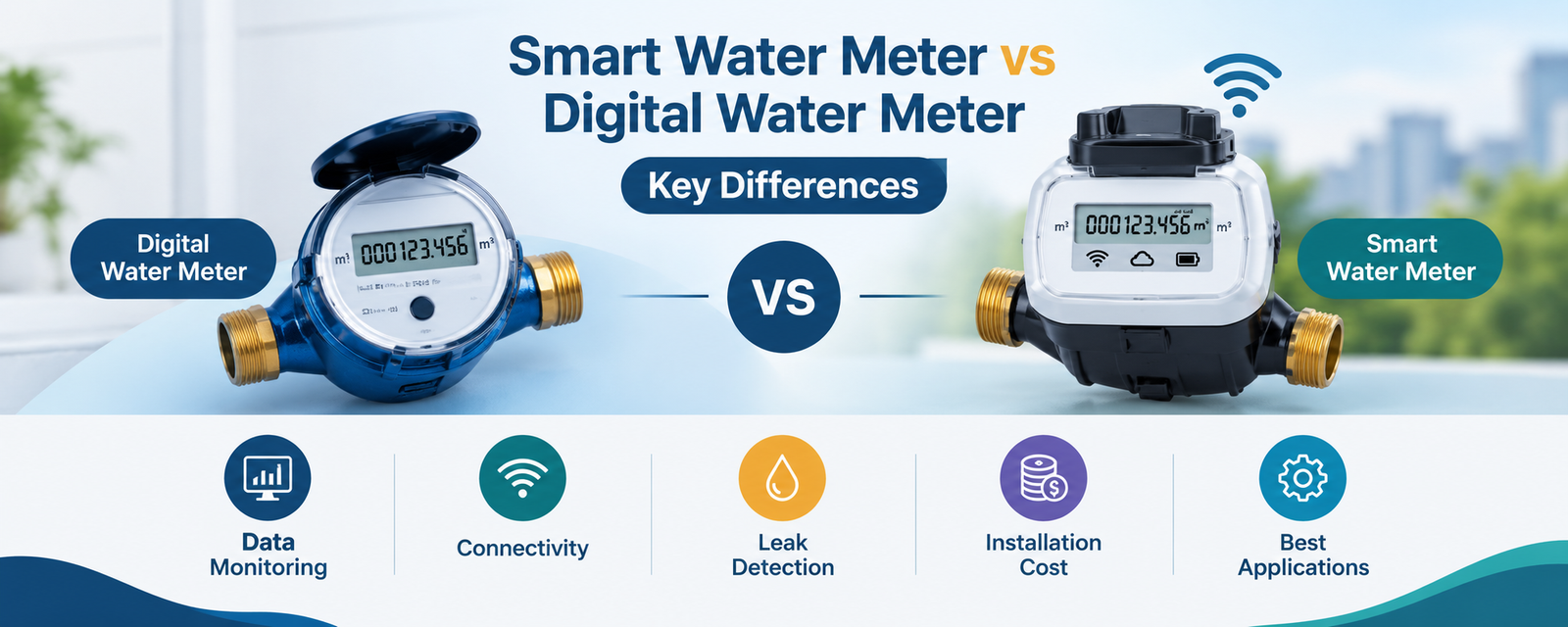
- Data monitoring: A digital water meter may display readings locally, while a smart water meter can provide remote access to consumption data.
- Connectivity: Smart meters generally include communication capabilities. Digital meters may or may not offer connectivity.
- Leak detection: Smart systems may identify unusual usage patterns and generate alerts, depending on their capabilities.
- Installation cost: Smart meters may cost more because of their communication hardware, software, and additional features.
- Best applications: Digital meters suit straightforward measurement needs, whereas smart meters can be useful when continuous monitoring and automated data collection are priorities.
The right choice depends on your budget, monitoring requirements, and the features available in the selected model.
Benefits of Installing a Smart Water Meter
A smart water meter offers several potential advantages for modern water management.
1. Better water consumption monitoring
Access to frequent usage data helps users understand how much water they consume and identify opportunities to reduce unnecessary use.
2. Early identification of unusual usage
Unexpected increases in consumption may indicate leakage, a running tap, or another plumbing issue. Alerts and usage analysis can help users investigate these problems sooner.
3. Convenient remote readings
Connected meters can transmit readings automatically, reducing the need for manual inspections where compatible systems are available.
4. Improved billing accuracy
Automated readings can reduce errors associated with manual data collection. Actual billing accuracy still depends on correct installation, meter calibration, and the billing system.
5. More informed decisions
Historical consumption data helps households, facility managers, and businesses compare usage over time and make better water management decisions.
How to Choose the Right Water Meter for Home
Choosing a water meter for home use requires more than comparing prices. Consider these factors before purchasing:
- Pipe size: Select a meter compatible with your existing plumbing and required flow range.
- Measurement accuracy: Check the manufacturer’s specifications and applicable certification requirements.
- Water flow requirements: Ensure the meter can measure both low and high flow rates expected in your property.
- Connectivity: If remote monitoring is important, verify the communication method and compatibility with your monitoring system.
- Durability: Consider water quality, operating pressure, temperature limits, and installation conditions.
- Maintenance and support: Check service availability, warranty terms, and calibration requirements.
A suitable residential water meter should meet your property’s actual consumption and installation needs rather than simply offering the greatest number of features.
Understanding Water Flow Meters
Water flow meters measure the volume or flow rate of water moving through a pipe. They are used in residential plumbing, commercial buildings, manufacturing facilities, and water treatment systems.
Common technologies include mechanical meters, electromagnetic meters, ultrasonic meters, and turbine-based meters. Each type has different operating requirements, accuracy characteristics, and suitable applications.
When selecting a water meter, consider the water’s characteristics, expected flow range, pressure conditions, and required measurement accuracy. These factors help determine which technology is appropriate for the application.
Explore Measurement and Instrumentation Solutions with MTC
Machine Tool Centre (MTC) works in the industrial automation and instrumentation sector. Businesses evaluating measurement systems and related industrial requirements can explore its offerings at mtc and confirm the availability and suitability of the required equipment directly with the company.
For any water measurement application, selecting equipment that meets the technical specifications and operating conditions is essential for dependable performance.
Conclusion
Both smart and digital water meters offer practical advantages, but their capabilities differ. A digital water meter provides convenient electronic readings, while a smart water meter can add remote monitoring, automated data transmission, and usage alerts.
Before purchasing, evaluate your water consumption, budget, connectivity needs, and installation requirements. Whether you need a basic water meter or an advanced monitoring solution, choosing the right device can help improve water management, identify unusual consumption, and support more informed decisions.

