
Refineries operate complex processes where temperature, pressure, flow, level, and chemical composition must be carefully monitored and controlled. Even a small variation in an operating parameter can affect product quality, equipment performance, energy consumption, and plant safety. This is why accurate and reliable refinery process instrumentation is an essential part of modern refinery operations.
From crude oil processing to separation, heating, cooling, and product handling, instrumentation provides operators with the information required to understand and control different stages of the process.
What Is Refinery Process Instrumentation?
Refinery process instrumentation refers to the instruments and measurement technologies used to monitor and control industrial processes within a refinery. These systems typically include sensors, transmitters, analyzers, control valves, controllers, and related equipment.
The instruments continuously measure important process parameters such as:
- Pressure
- Temperature
- Flow
- Liquid level
- Process composition
- Other critical operating conditions
The collected information can then be displayed to operators or integrated into a centralized control system.
By providing accurate process data, instrumentation helps operators maintain desired operating conditions and respond to process changes more effectively.
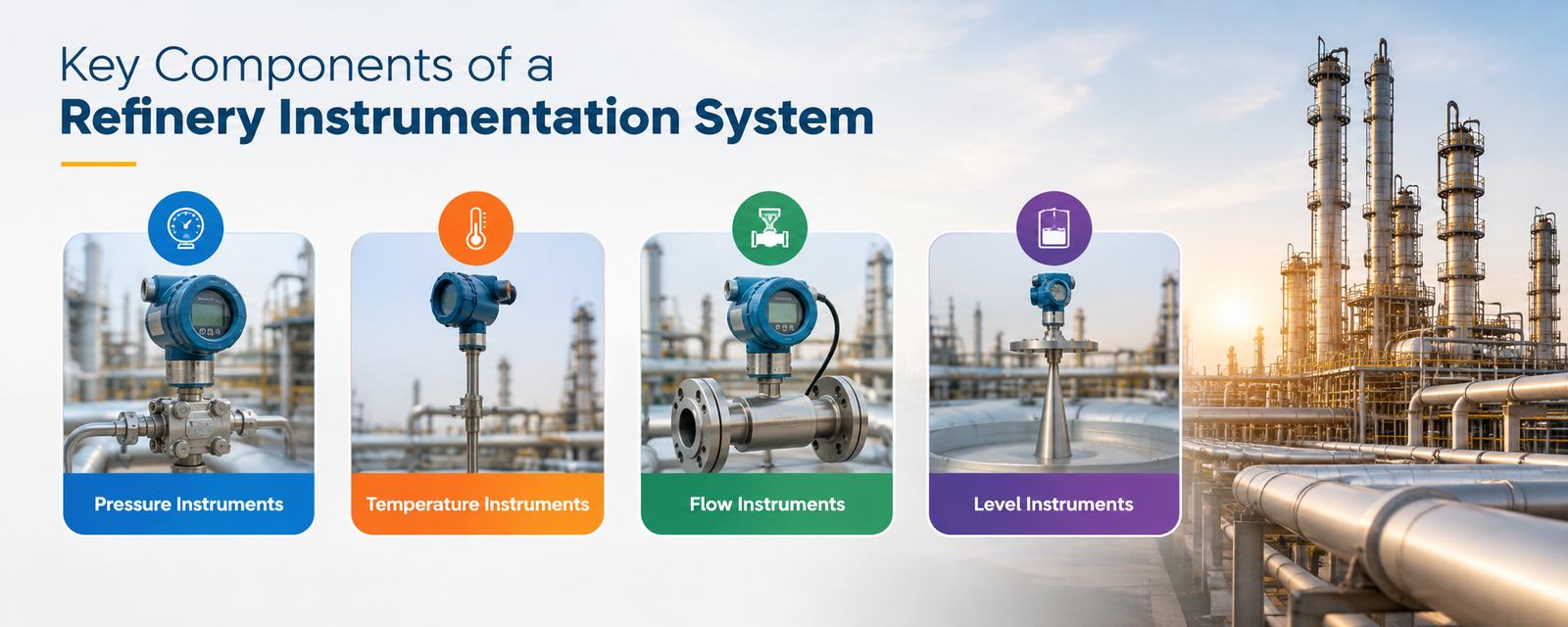
Key Components of a Refinery Instrumentation System
A modern refinery instrumentation system consists of several interconnected components, each performing a specific function.
Pressure Instruments
Pressure measurement is important across many refinery processes. Pressure transmitters and gauges help monitor pipelines, vessels, reactors, and other equipment.
They can help operators:
- Monitor operating pressure
- Identify abnormal pressure conditions
- Support process control
- Improve process visibility
Temperature Instruments
Temperature directly affects several refining processes. Temperature sensors and transmitters help monitor heating, cooling, distillation, and other operations.
Accurate temperature measurement helps maintain process conditions within the required range and supports consistent operation.
Flow Instruments
Flow measurement provides information about the movement of crude oil, refined products, chemicals, steam, and other process fluids.
Flow instruments can help with:
- Monitoring material movement
- Maintaining required flow rates
- Supporting process control
- Tracking process performance
Level Instruments
Level measurement is commonly used in storage tanks, process vessels, separators, and other equipment.
Reliable level instruments help operators:
- Monitor tank and vessel levels
- Maintain appropriate operating conditions
- Reduce the risk of overflow
- Support safer plant operation
Role of Refinery Process Control Instruments
Refinery process control instruments are used not only for measurement but also for controlling operating conditions. Depending on the plant design, instruments can be connected to control systems that automatically regulate process variables.
For example, a temperature measurement can be used as an input for a control loop that adjusts a heating or cooling process. Similarly, flow measurement can support automatic control of pumps or valves.
This can reduce dependence on continuous manual adjustments and help maintain more consistent process conditions.
Improving Safety Through Instrumentation
Safety is one of the most important considerations in refinery operations. Refineries handle combustible materials, high temperatures, high pressures, and various chemicals. Continuous monitoring therefore plays a critical role in identifying abnormal conditions.
Refinery monitoring instruments provide operators with real-time information about critical process parameters.
A properly designed monitoring setup can support:
- Early identification of abnormal readings
- Real-time visibility of process conditions
- Alarm generation for defined operating limits
- Faster operator response
- Continuous monitoring of critical equipment
When instrumentation is properly selected, installed, calibrated, and maintained, it contributes to better process visibility and supports timely operational responses.
Supporting Efficient Refinery Operations
Instrumentation also contributes to operational efficiency. Accurate measurement helps plant teams understand how equipment and processes are performing.
Reliable process data can assist with:
- Identifying process variations
- Optimizing operating conditions
- Monitoring energy usage
- Evaluating equipment performance
- Planning maintenance activities
- Reviewing historical process trends
Over time, historical process data can also help organizations identify recurring issues and improve operational practices.
A well-designed refinery instrumentation system therefore supports both day-to-day process control and long-term operational analysis.
Choosing the Right Instrumentation
Every refinery has different process requirements, operating conditions, and measurement points. Instrument selection should therefore consider several factors, including:
- Process fluid characteristics
- Pressure and temperature range
- Required measurement accuracy
- Installation environment
- Instrument compatibility
- Maintenance requirements
- Integration with existing control systems
The overall instrumentation architecture should also be compatible with the refinery’s automation and control requirements.
Selecting appropriate instruments is important because accurate field measurements form the foundation for effective process monitoring and control.
Why Reliable Instrumentation Matters
A refinery depends on continuous and accurate process information. When measurement systems are reliable, operators have better visibility into what is happening across different areas of the plant.
The right combination of refinery instrumentation, control equipment, and monitoring technologies can help create a structured flow of information:
Process → Field Instrument → Control System → Operator → Process Action
This connection allows measured process conditions to be converted into useful operational information and control decisions.
Explore Instrumentation Solutions
Organizations looking for industrial instrumentation solutions can explore the range of expertise and solutions available through MTC Machine Tool Centre at mtc.
The right instrumentation approach can help create a more reliable connection between field measurements, process control, and plant operations.
Conclusion
Refinery instrumentation forms an important foundation for safe, controlled, and efficient refinery operations. From pressure and temperature measurement to flow, level, and process monitoring, instrumentation provides the data needed to understand and manage complex processes.
With reliable refinery process instrumentation, refinery process control instruments, refinery monitoring instruments, and a properly designed refinery instrumentation system, refineries can achieve better process visibility while supporting consistent and efficient operations.

