
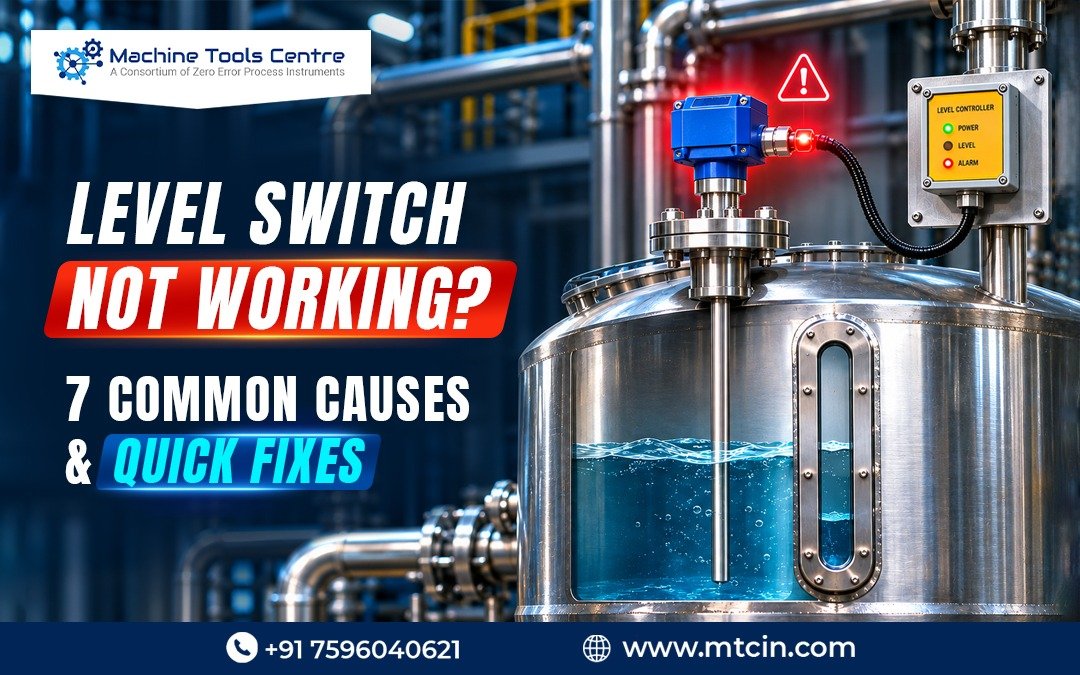
A level switch is a small device with a big job. It tells your system when a tank is full, when it is running low, and when a pump should start or stop. So when a level switch stops working, the effects spread fast: overflowing tanks, pumps running dry, false alarms and unplanned downtime. The good news is that most level switch failure causes are easy to trace and fix. Here are seven common ones, along with quick solutions.
1. Float Switch Stuck
A float switch stuck in one position is the most common complaint. Sludge, scale, rust or debris collects around the float and stem and stops it from moving freely. Sometimes the float is simply trapped against the tank wall or a nearby pipe. The result is a switch that never changes state, so the pump never starts or never stops.
Quick fix: Remove the switch, clean the float and stem with a soft brush and mild cleaner, and check that it moves smoothly. Leave enough clearance around it inside the tank.
2. Buildup on the Sensing Element
Sticky liquids, slurry, crystals and foam can coat the probe, fork or diaphragm. A coated sensor may read “wet” when the tank is empty, or “dry” when it is full, which leads to a level switch false alarm.
Quick fix: Clean the sensing element on a regular schedule and choose a switch designed for sticky or viscous media.
3. Wiring and Electrical Faults
Loose terminals, corroded connections, damaged cables and moisture inside the junction box are frequent culprits. These faults often cause intermittent behaviour that is hard to reproduce.
Quick fix: Switch off the power, inspect and tighten terminals, replace damaged cables and make sure cable glands and covers are sealed properly.
4. Incorrect Installation
A switch mounted at the wrong height or angle will trip at the wrong level. Placing it close to an inlet pipe, agitator or pump suction exposes it to splashing and turbulence.
Quick fix: Follow the manufacturer’s mounting guidelines and move the switch to a calmer zone of the tank, or add a stilling well.
5. Turbulence, Foam and Vibration
Even a correctly installed switch can misbehave when the liquid is constantly moving. Waves and foam can briefly touch the sensor and trigger a false signal, while strong vibration can shake contacts out of position.
Quick fix: Add a time delay in the control circuit, use a damping chamber, or fix the switch firmly to reduce vibration.
6. Wrong Switch for the Application
Temperature, pressure, chemical compatibility and liquid density all matter. A switch built for clean water may fail quickly in hot oil, acid or a low-density liquid.
Quick fix: Check the specifications against your process conditions and select the right material, rating and switching principle.
7. Worn Mechanical or Contact Parts
Over time, reed contacts, springs, seals and diaphragms wear out. Repeated switching, power surges and ageing materials gradually reduce reliability, and these level switch failure causes often show up as slow or inconsistent response.
Quick fix: Replace worn components or the complete switch before it fails completely, especially in critical applications.
How to Test a Level Switch
Testing takes only a few minutes and helps confirm whether the switch or the wiring is at fault.
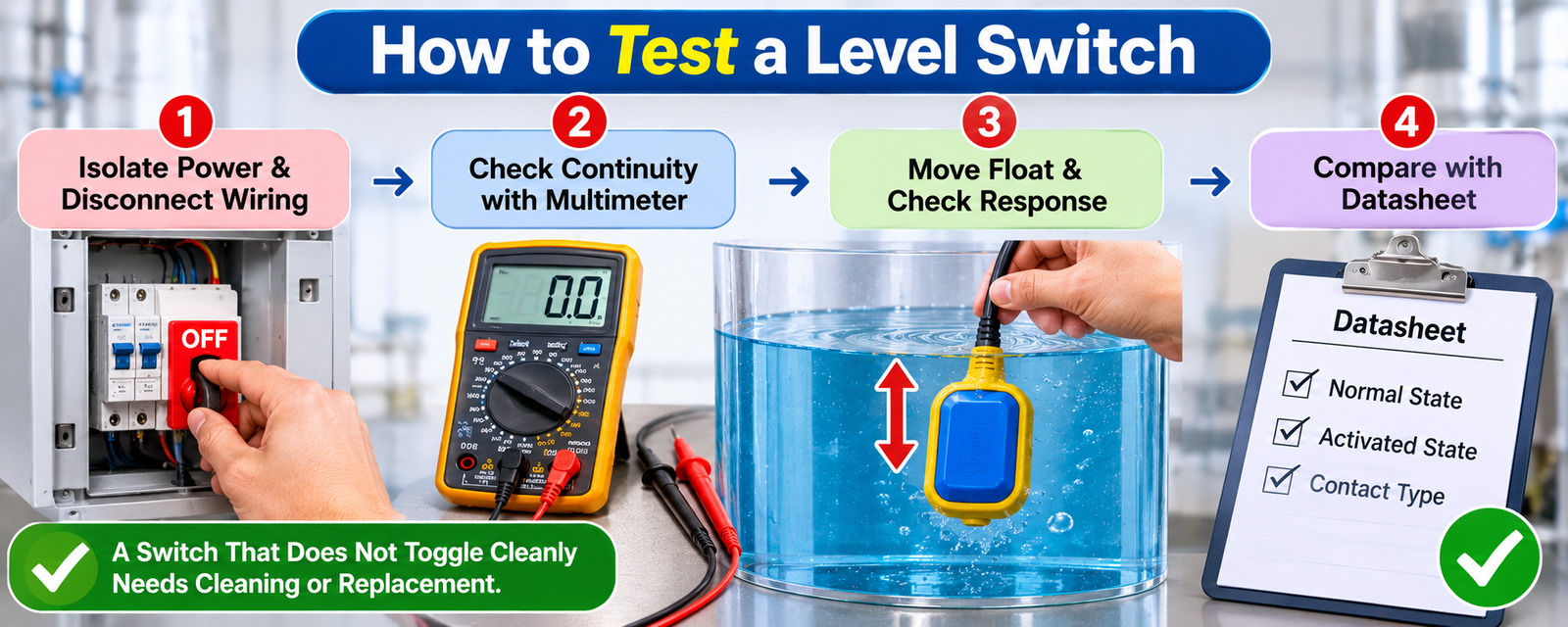
- Isolate the power and disconnect the switch wiring safely.
- Check continuity with a multimeter in the normal and activated positions.
- Move the float by hand, or lift the switch out and immerse it in water, and watch whether the contacts change state.
- Compare the result with the datasheet. A switch that does not toggle cleanly needs cleaning or replacement.
Level Switch Maintenance Tips
A little routine care prevents most failures. Level switch maintenance should include:
- Cleaning the float or sensor every few months, or more often in dirty media
- Inspecting wiring, glands and enclosures for moisture or corrosion
- Testing the switch during planned shutdowns
- Keeping a spare switch for critical tanks
- Recording failures and dates to spot repeating problems
Final Thoughts
When a level switch stops working, do not guess. Start with the simple checks: cleaning, wiring, mounting and testing. If the problem keeps coming back, the switch may not suit your process. For reliable level switches and expert guidance on choosing the right one, visit mtcin.com and talk to the MTC team about your application.

