
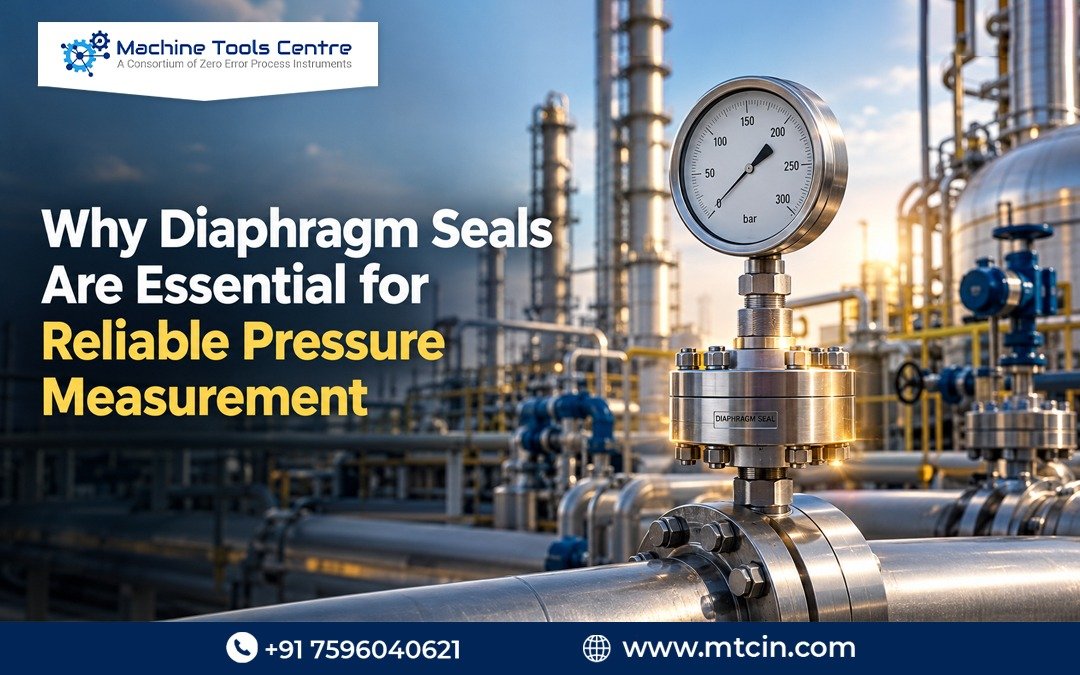
Accurate pressure measurement is essential for safe and efficient operations across industries such as oil and gas, chemical processing, pharmaceuticals, food processing, power generation, and water treatment. However, measuring pressure can become challenging when the process medium is corrosive, viscous, contaminated, or exposed to extreme temperatures. This is where a diaphragm seals plays an important role. It creates a protective barrier between the process fluid and the pressure instrument, helping maintain measurement accuracy while protecting sensitive components from harsh process conditions.
For industries that depend on reliable pressure monitoring, selecting the right diaphragm seal can improve instrument performance, reduce maintenance requirements, and support safer operations.
What Is a Diaphragm Seal?
A diaphragm seal is a device installed between a process connection and a pressure-measuring instrument. It uses a flexible diaphragm to isolate the instrument from the process medium.
When pressure is applied, the diaphragm moves and transfers the pressure through a filling fluid to the connected instrument. This allows the pressure to be measured without exposing the instrument directly to the process fluid.
A diaphragm seal is particularly useful when the process medium can:
- Corrode the instrument’s wetted parts
- Clog or block small pressure connections
- Solidify or crystallize
- Contain suspended particles
- Have high viscosity
- Operate at very high or low temperatures
Why Are Diaphragm Seals Essential?
Pressure instruments can be affected by direct contact with aggressive or difficult process media. A diaphragm seal provides an additional layer of protection while maintaining pressure transmission.
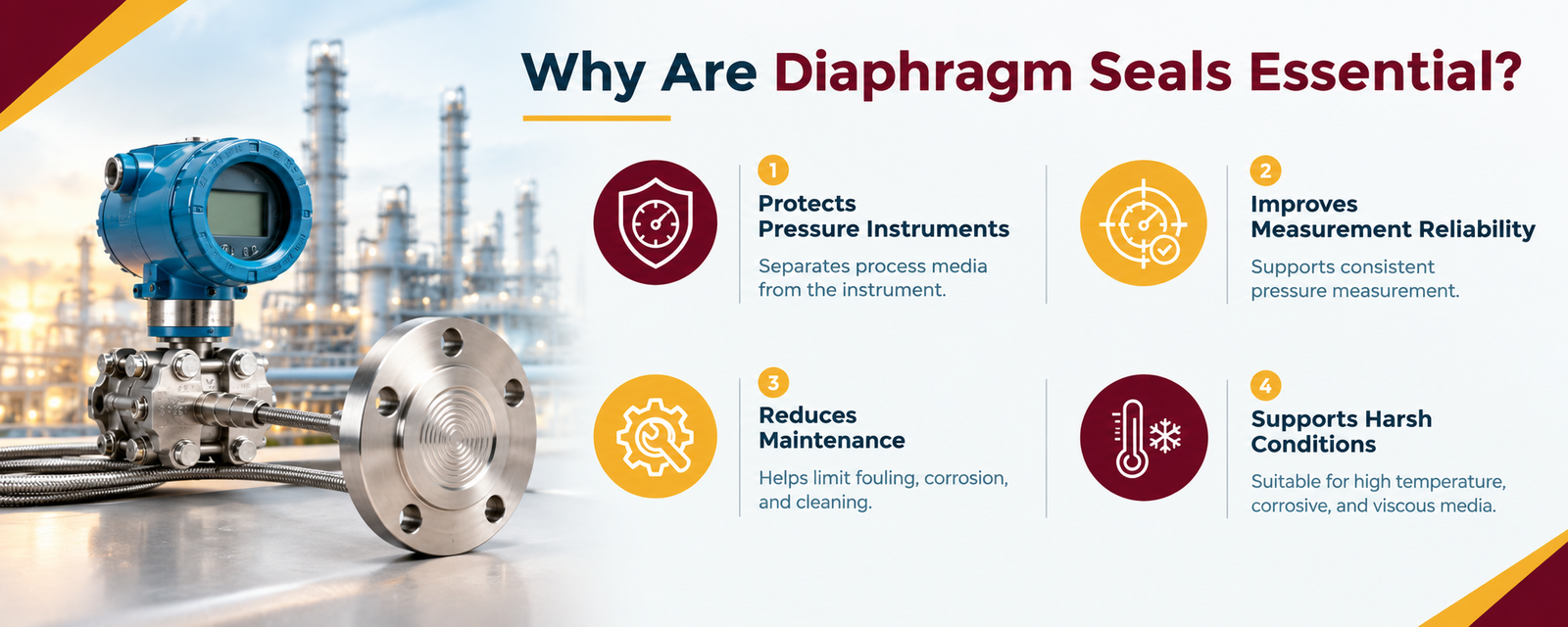 Some key advantages include:
1. Protects Pressure Instruments
The diaphragm separates the process medium from the sensitive measuring element. This reduces the risk of corrosion, contamination, and mechanical damage.
2. Improves Measurement Reliability
By isolating the instrument from challenging process conditions, diaphragm seals help maintain consistent pressure measurement over time.
3. Reduces Maintenance
Process fluids that contain solids, sticky materials, or corrosive chemicals can cause frequent instrument problems. A suitable diaphragm seal can minimize these issues and reduce cleaning or replacement requirements.
4. Supports Harsh Process Conditions
Diaphragm seals can be designed for applications involving high temperatures, aggressive chemicals, viscous fluids, and other demanding operating environments.
Diaphragm Seal for Pressure Gauge
A diaphragm seal for pressure gauge is commonly used when a standard pressure gauge cannot be directly exposed to the process medium.
For example, applications involving corrosive chemicals, slurry, wastewater, or viscous fluids may require isolation between the process and the gauge.
Using a diaphragm seal with a pressure gauge can help:
- Prevent process fluid from entering the gauge
- Reduce corrosion of internal components
- Minimize clogging of pressure connections
- Improve gauge service life
- Maintain more reliable pressure readings
The seal should be selected according to the process pressure, temperature, fluid characteristics, and required measurement accuracy.
Diaphragm Seal for Pressure Transmitter
A diaphragm seal for pressure transmitter provides similar protection while allowing pressure transmitters to be used in demanding process environments.
Pressure transmitters are widely used in automated industrial systems where continuous pressure monitoring and control are required. A diaphragm seal helps isolate the transmitter from process conditions that could otherwise affect its performance.
These arrangements are particularly useful in:
- Chemical processing plants
- Oil and gas facilities
- Pharmaceutical manufacturing
- Food and beverage processing
- Water and wastewater treatment
- Power generation systems
Remote diaphragm seal configurations can also be used when the pressure instrument needs to be installed away from the process connection.
Diaphragm Seal Selection: What Should You Consider?
Proper diaphragm seal selection is important for achieving accurate and dependable pressure measurement. The seal should be matched to the actual process conditions rather than selected only according to instrument size.
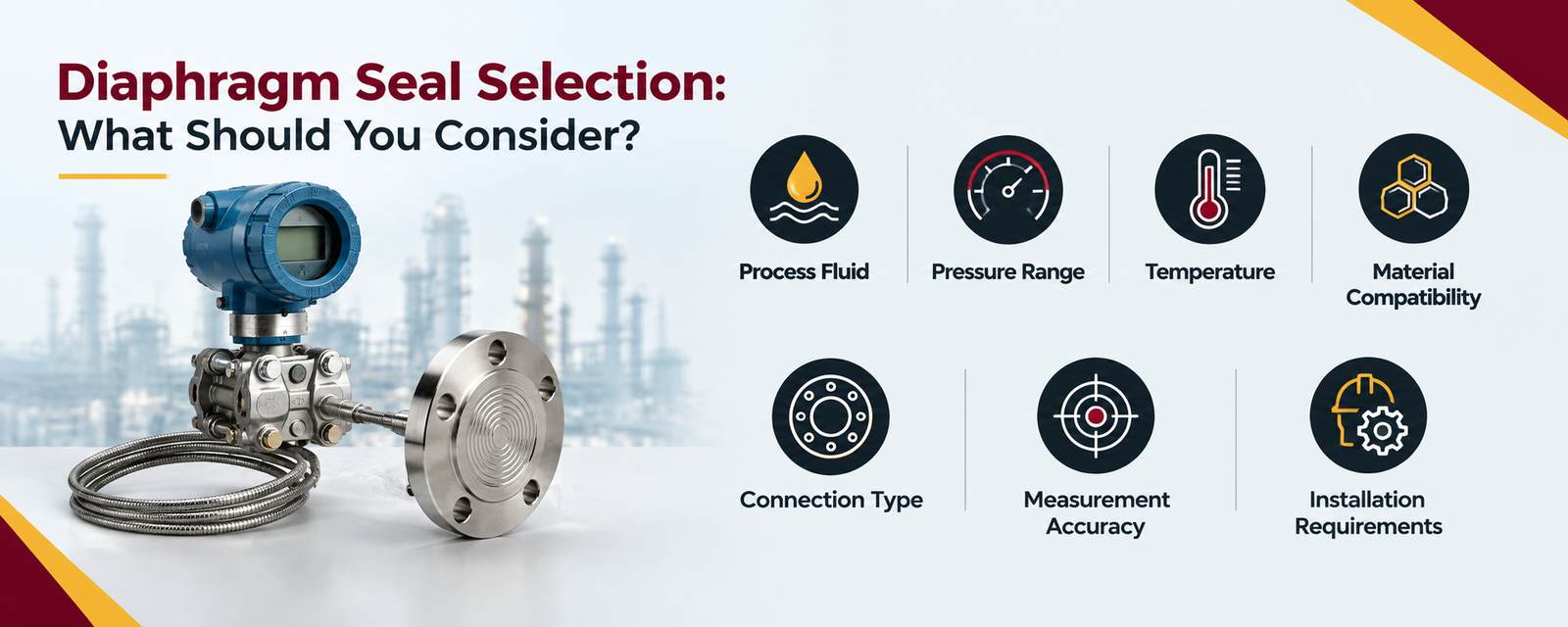 Consider the following factors:
- Process fluid: Check whether the medium is corrosive, viscous, abrasive, or contaminated.
- Pressure range: Select a seal suitable for the minimum and maximum operating pressure.
- Temperature: Consider both process temperature and ambient conditions.
- Material compatibility: The diaphragm and wetted components should be compatible with the process medium.
- Connection type: Ensure that the seal matches the process and instrument connections.
- Measurement accuracy: Consider the effect of seal design and filling fluid on measurement performance.
- Installation requirements: Evaluate whether a direct or remote seal configuration is more suitable.
Common Diaphragm Seal Applications
There are numerous diaphragm seal applications across industrial processes. They are especially valuable wherever pressure instruments must be protected from challenging process conditions.
Common applications include:
- Chemical and petrochemical processing
- Oil and gas production
- Pharmaceutical manufacturing
- Food and beverage processing
- Pulp and paper industries
- Water and wastewater treatment
- Power plants
- Industrial process control systems
Choose the Right Solution for Your Process
A diaphragm seal is more than just a protective component. It plays an important role in maintaining reliable pressure measurement when conventional instruments may be exposed to difficult process conditions.
From a diaphragm seal for pressure gauge applications to a diaphragm seal for pressure transmitter installations, the correct configuration depends on factors such as pressure, temperature, process fluid, materials, and installation requirements.
For industrial pressure measurement and instrumentation solutions, MTC Machine Tool Centre (MTC) provides a range of process instrumentation solutions designed for demanding industrial applications. You can explore their products and solutions at mtc.
With proper diaphragm seal selection, industries can protect pressure instruments, improve measurement reliability, and support safer and more efficient process operations.

