
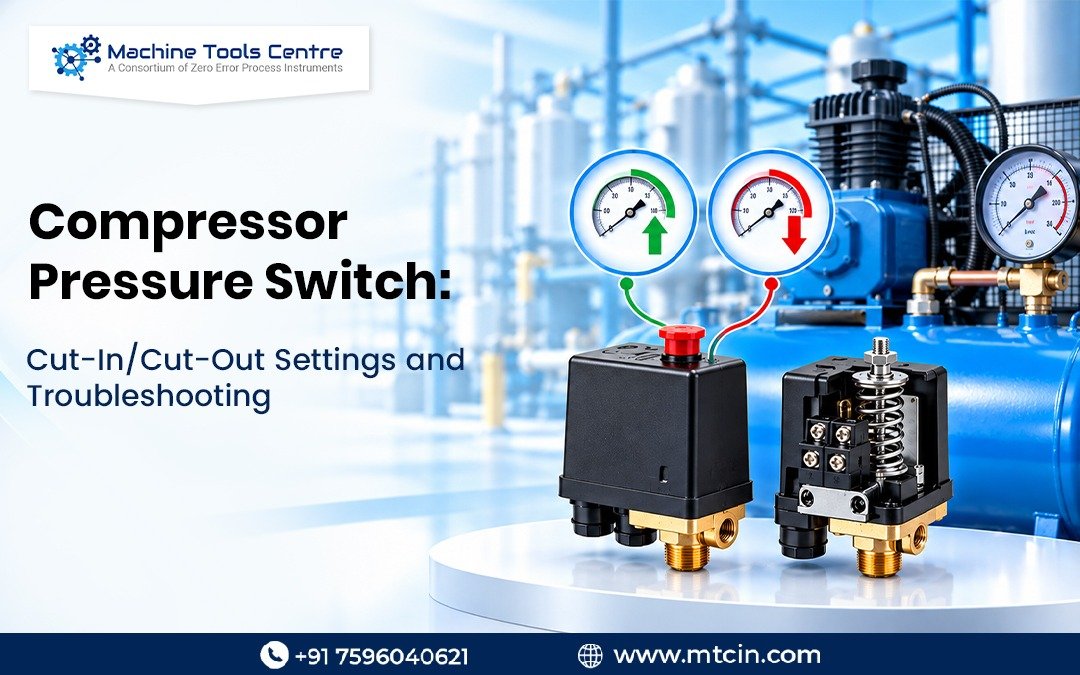
A compressor pressure switch is an essential component that automatically controls an air compressor by monitoring pressure levels inside the air receiver. It switches the compressor motor on and off according to predefined pressure limits, helping maintain consistent air pressure and preventing excessive pressure buildup. Understanding cut-in and cut-out settings is important for efficient operation, equipment protection, and reliable performance.
Whether you operate an industrial air compressor or a smaller workshop unit, knowing how an air pressure switch works and how to troubleshoot common problems can help reduce downtime and maintenance costs.
What Is a Compressor Pressure Switch?
A compressor pressure switch is an automatic control device that detects changes in air pressure and controls the compressor motor accordingly. When the pressure drops below a preset level, the switch starts the compressor. Once the required pressure is reached, it stops the motor.
Modern pressure switches may use mechanical springs and diaphragms or electronic sensing mechanisms, depending on the design.
Common applications include:
- Industrial air compressors
- Pneumatic tools and equipment
- Manufacturing and processing facilities
- Workshop and garage compressors
- Compressed air distribution systems
Understanding Cut-In and Cut-Out Pressure Settings
Cut-in and cut-out settings determine when the compressor starts and stops. Correct adjustment helps maintain the required operating pressure while protecting the equipment.
1. Cut-In Pressure
Cut-in pressure is the lower pressure limit at which the compressor automatically starts. When the air receiver pressure falls to this level, the pressure switch activates the motor.
Example: If the cut-in pressure is set to 90 PSI, the compressor starts when the pressure drops to approximately 90 PSI.
2. Cut-Out Pressure
Cut-out pressure is the upper pressure limit at which the compressor stops running. Once the receiver reaches this pressure, the switch disconnects the motor.
Example: If the cut-out pressure is set to 120 PSI, the compressor stops when the pressure reaches approximately 120 PSI.
3. Differential Pressure
Differential pressure is the difference between the cut-out and cut-in settings. In the example above, the differential is 30 PSI.
The correct differential depends on the compressor manufacturer’s specifications, the pressure switch design, and the requirements of the application. Always follow the equipment’s rated operating limits.
How to Adjust a Compressor Pressure Switch
Before making adjustments, consult the manufacturer’s instructions. Incorrect settings can damage equipment or create unsafe operating conditions.
Follow these general steps:
- Disconnect the power: Switch off and isolate the electrical supply before opening the pressure switch enclosure.
- Release stored pressure if required: Follow the manufacturer’s procedure before servicing any pressurized components.
- Locate the adjustment mechanism: Some mechanical pressure switches have separate adjustments for operating pressure and differential.
- Check the manufacturer’s settings: Identify the recommended cut-in and cut-out pressures for your compressor.
- Make small adjustments: Use only the approved adjustment method. Do not exceed the rated pressure or electrical limits.
- Test the operation: Close the enclosure, restore power safely, and verify the switching points using a suitable pressure gauge.
Pressure switch designs vary, so never assume that every adjustment screw performs the same function.
Common Pressure Switch Problems and Troubleshooting
A faulty pressure switch sensor or incorrect settings can affect compressor performance. The following table covers common symptoms and their possible causes.
| Problem | Possible Cause | Recommended Action |
| Compressor does not start | Power supply issue, faulty switch, or pressure already above cut-in | Check the supply and pressure readings; have electrical faults inspected |
| Compressor does not stop | Incorrect settings, damaged contacts, or switch failure | Shut down the compressor safely and arrange inspection |
| Frequent starting and stopping | Incorrect differential, air leaks, or insufficient receiver capacity | Check for leaks and verify the specified pressure settings |
| Inconsistent pressure | Faulty sensing mechanism or inaccurate gauge | Compare readings and inspect the switch |
| Air leakage near the switch | Damaged seal or connection | Isolate the system and replace damaged components as required |
Important: If the compressor continues running beyond its rated pressure, shut it down safely. Never bypass the pressure switch or rely on it as a substitute for a properly maintained pressure relief valve.
Electrical repairs and work on pressurized systems should be performed by qualified personnel.
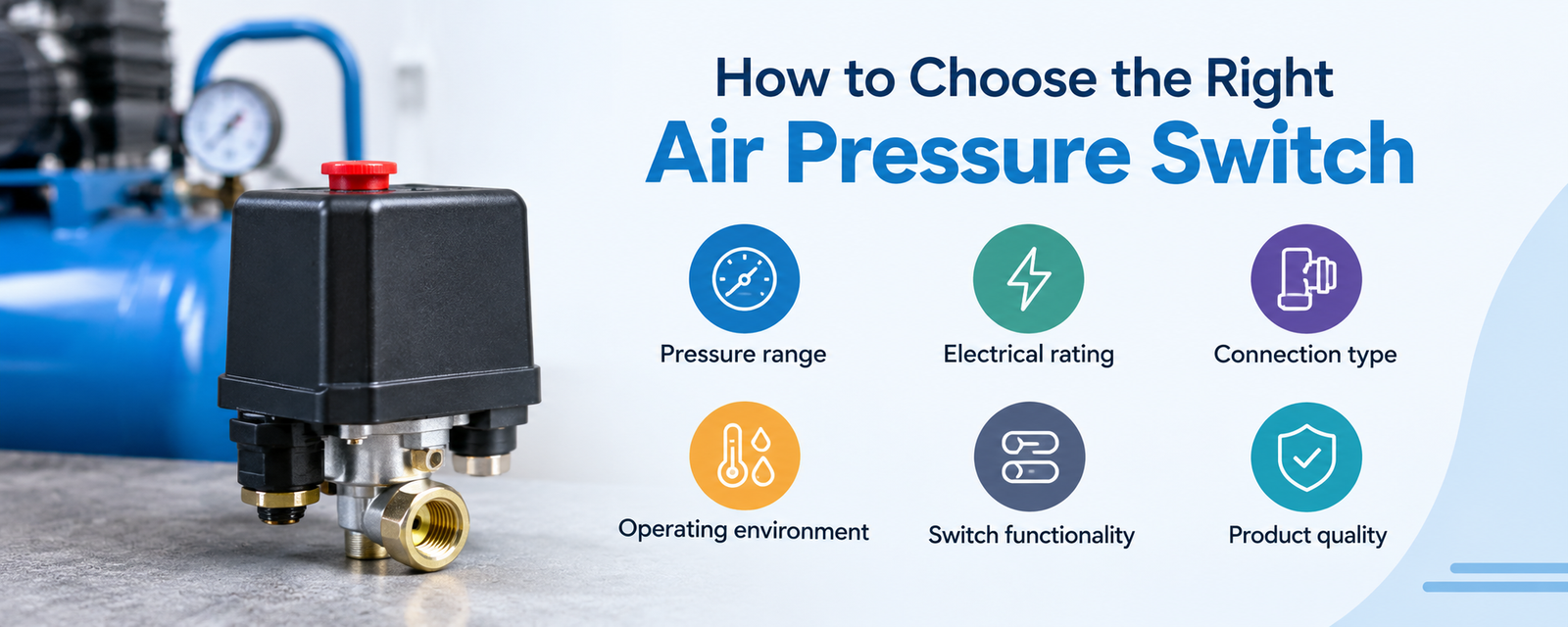
How to Choose the Right Air Pressure Switch
Selecting the correct switch helps ensure reliable compressor operation. Consider these factors before purchasing:
- Pressure range: Choose a switch that supports the required cut-in and cut-out pressures.
- Electrical rating: Verify compatibility with the compressor motor and control circuit.
- Connection type: Check the pressure port size, thread type, and mounting requirements.
- Operating environment: Consider temperature, humidity, vibration, and exposure to dust.
- Switch functionality: Determine whether you need a fixed or adjustable differential.
- Product quality: Check the manufacturer’s specifications, compatibility, and reliability.
If you are comparing pressure switch prices, remember that cost depends on pressure range, electrical capacity, construction, features, and intended application. The lowest-priced option may not be suitable for every compressor.
Find Suitable Pressure Switches at MTC
Machine Tool Centre (MTC) supports industrial buyers looking for machine components and equipment-related solutions. When selecting a compressor pressure switch, consider your compressor’s specifications, required operating range, and installation requirements before making a purchase.
For suitable product options, technical specifications, and pressure switch price comparisons, consult MTC through its official website, mtc.

