
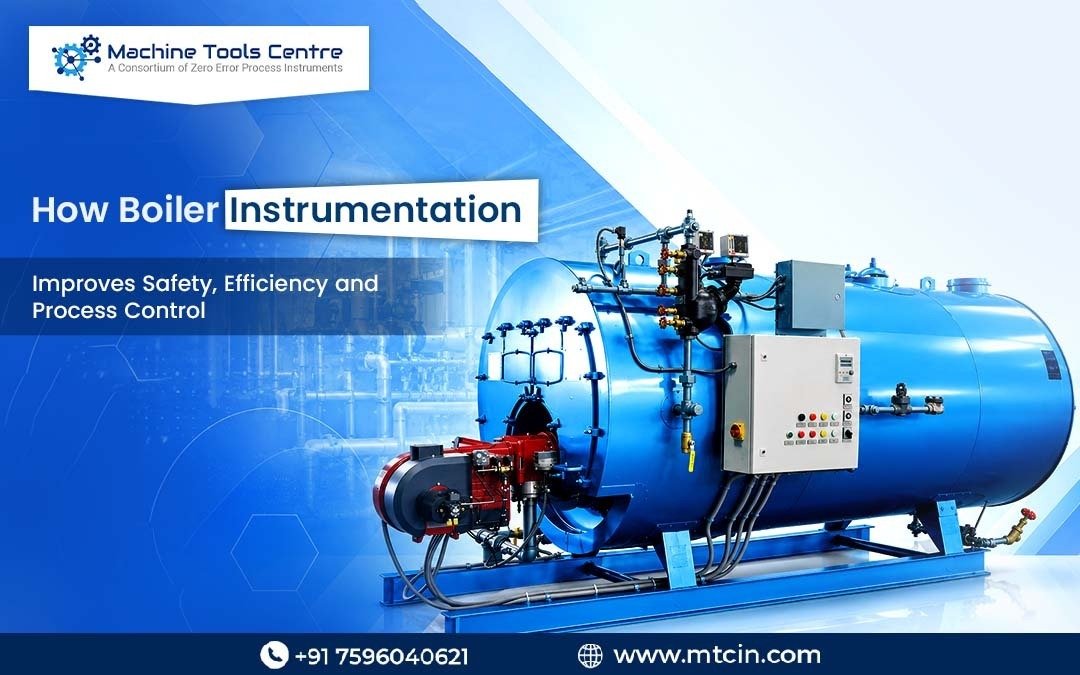
Boilers are widely used across industries to generate steam and provide heat for manufacturing and processing operations. Because boilers operate under high temperatures and pressures, accurate monitoring and control are essential for safe and efficient operation. This is where boiler instrumentation plays an important role.
Boiler instrumentation consists of measuring devices, sensors, controllers, indicators, and safety systems that help operators monitor critical operating parameters. By providing accurate information about pressure, temperature, water level, flow, and other conditions, these systems support safer operation, better efficiency, and improved process control.
What Is Boiler Instrumentation?
Boiler instrumentation refers to the instruments and control systems used to measure and regulate different parameters associated with boiler operation. These instruments continuously provide information about operating conditions, allowing operators and automated control systems to respond when values move outside their desired ranges.
Common parameters monitored through boiler instrumentation include:
- Steam pressure
- Water level
- Steam temperature
- Feedwater flow
- Fuel flow
- Combustion conditions
- Flue gas temperature
- Draft and furnace pressure
Accurate measurement of these parameters helps maintain stable boiler performance while reducing the risk associated with abnormal operating conditions.
Improving Boiler Safety
Safety is one of the most important applications of instrumentation in boiler systems. Boilers operate under significant pressure, and uncontrolled changes in pressure, temperature, or water level can create serious operational risks.
Boiler safety instrumentation helps detect abnormal conditions and provides warnings or initiates protective actions when required. Pressure switches, temperature sensors, level indicators, alarms, and safety interlocks can work together to monitor critical conditions.
For example, maintaining the correct water level is essential for safe boiler operation. A reliable level measurement system can help identify low-water conditions and allow appropriate corrective action before the situation becomes more serious.
Steam Boiler Safety Instrumentation
In industrial environments, steam boiler safety instrumentation is particularly important because steam is generated at high temperatures and pressures. Monitoring steam pressure and temperature helps operators maintain operating conditions within specified limits.
Pressure transmitters can continuously measure steam pressure and send information to the control system. Similarly, temperature instruments can monitor steam and other critical points within the system.
Safety alarms and interlocks can also provide additional protection by alerting operators or preventing certain operations when unsafe conditions are detected.
Better Efficiency Through Accurate Measurement
Instrumentation is not only about safety. It can also help improve boiler efficiency by providing accurate operating data.
Efficient combustion requires the appropriate relationship between fuel and air. Measuring fuel flow, air flow, oxygen levels, and flue gas conditions can help operators identify inefficient combustion or unnecessary energy losses.
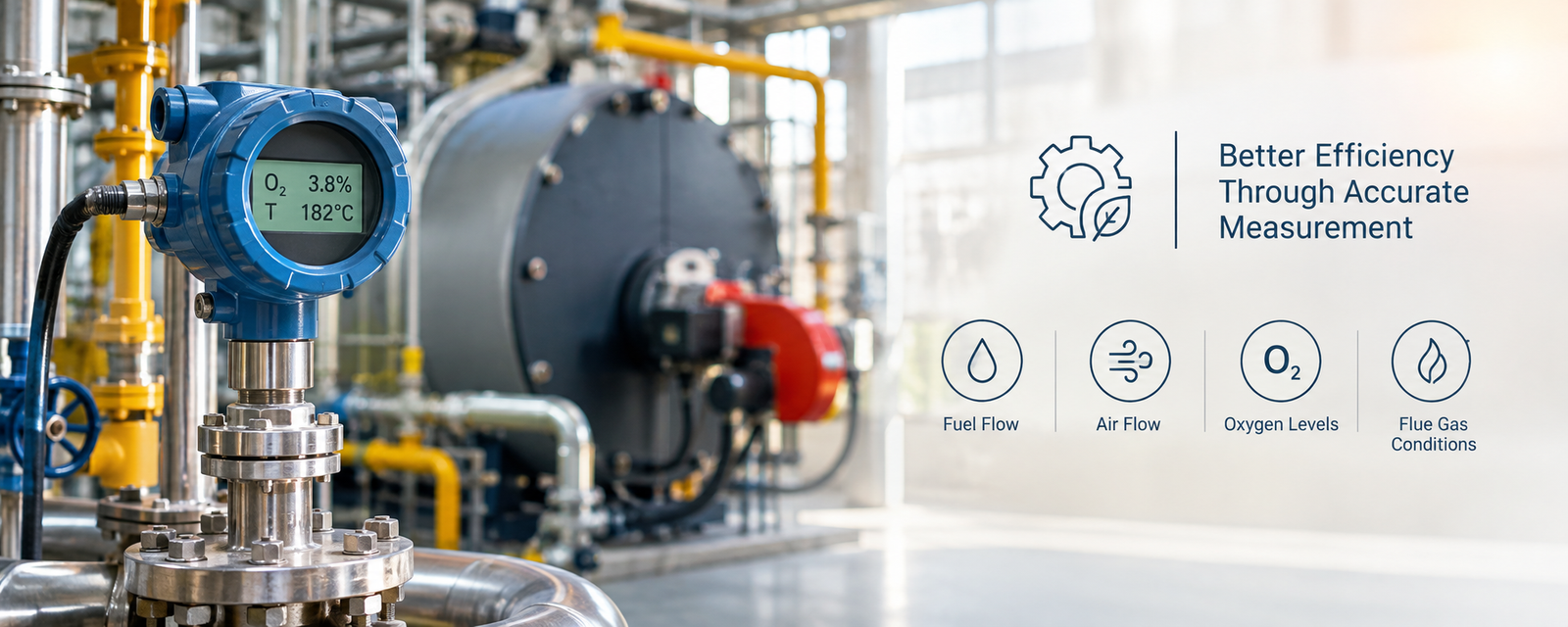 Accurate measurements can also support better control of feedwater and steam production. Maintaining stable operating conditions can reduce energy waste and help the boiler deliver consistent performance.
Regular monitoring can further help identify unusual trends that may indicate issues such as fouling, leakage, poor combustion, or declining equipment performance.
Boiler Measurement and Control
Boiler measurement and control work together to maintain desired operating conditions. Measurement instruments collect information, while controllers use this information to adjust relevant processes.
For instance, a pressure transmitter can measure steam pressure and communicate the reading to a control system. If the pressure moves away from the desired set point, the control system can adjust the relevant process to bring it back toward the required range.
Similarly, level measurement can be integrated with feedwater control to maintain an appropriate water level. This combination of measurement and automatic control reduces dependence on constant manual intervention.
Boiler Instrumentation for Safety and Process Control
Modern boiler instrumentation for safety can integrate measurement, alarms, interlocks, and control functions into a coordinated system. This allows operators to monitor the boiler from a central control interface while receiving alerts about abnormal conditions.
Depending on the application, instrumentation may include pressure transmitters, temperature sensors, flow meters, level transmitters, control valves, indicators, controllers, and safety switches.
Proper selection and installation are important because every boiler system has different operating requirements. Instruments should be selected according to parameters such as pressure range, temperature, process conditions, accuracy requirements, and applicable safety standards.
Supporting Predictive Maintenance
Instrumentation can also contribute to maintenance planning. Continuous measurement creates valuable operating data that can help identify changes in equipment behavior.
For example, unusual pressure, temperature, flow, or combustion readings may indicate that a component requires inspection. Detecting these changes earlier can help maintenance teams investigate potential problems before they develop into major operational disruptions.
Choosing the Right Instrumentation
A reliable instrumentation system begins with understanding the boiler and its process requirements. Instrument selection should consider the measurement range, accuracy, environmental conditions, response time, compatibility, and required safety functions.
For industrial instrumentation solutions and boiler measurement requirements, MTC Machine Tool Centre (MTC) provides industrial instrumentation and process measurement solutions through mtc. Businesses can explore suitable instrumentation options based on their specific application and process requirements.
Conclusion
Effective boiler instrumentation is essential for maintaining safe, efficient, and controlled boiler operation. By continuously monitoring pressure, temperature, level, flow, and combustion-related parameters, instrumentation systems provide operators with the information needed to maintain stable processes.
From boiler safety instrumentation and steam boiler safety instrumentation to advanced measurement and automatic control, the right instrumentation approach can support safer operations, better energy management, improved process stability, and more informed maintenance decisions.

