
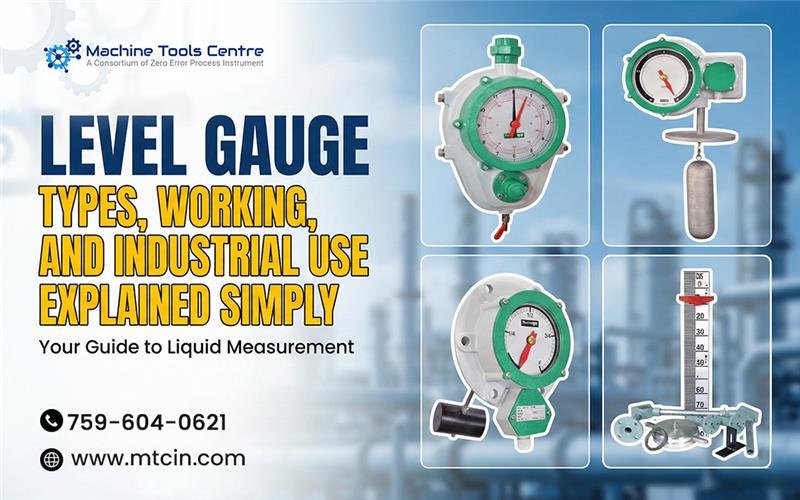
In many industries, one small thing decides whether a machine runs smoothly or stops suddenly — liquid level. Oil, coolant, water, chemicals, fuel — every machine that uses liquid needs to know how much is inside the tank. This is where a level gauge becomes important.
A level gauge is not a complicated device. Its job is simple: Show the liquid level clearly and safely.
In factories, workshops, power plants, machine tool industries, and process plants, level gauges are used every single day. Over time, industries have moved from basic sight glasses to safer and more reliable level gauge systems.
In this blog, we will explain:
- What a level gauge is
- Why it is important
- Magnetic level gauge
- Water level gauge
- Different types of level gauges
- How to choose the right one
What Is a Level Gauge?
A level gauge is a device used to indicate the level of liquid inside a tank, vessel, or container. Instead of guessing or opening the tank, a level gauge allows:
- Continuous monitoring
- Better safety
- Accurate operation
Level gauges are commonly used in:
- Machine tools
- Hydraulic systems
- Coolant tanks
- Oil reservoirs
- Boilers
- Chemical tanks
- Water storage systems
In Indian industries, level gauges are widely used because they are:
- Easy to install
- Easy to read
- Low maintenance
We Machine Tool Centre, one of the largest distributors of industrial components in India, supply level gauges that are already trusted by workshops and factories across the country.
Why Level Gauges Are Important in Industry
Many machine failures happen due to low liquid level or overflow. A level gauge helps prevent this.
Main benefits of using a level gauge:
- Prevents dry running of pumps
- Avoids overflow and spillage
- Improves machine life
- Increases operator safety
- Reduces downtime
In machine tool applications, even a small drop in coolant or oil level can affect:
- Cutting performance
- Surface finish
- Tool life
That is why industries rely on reliable level gauges supplied by experienced distributors like Machine Tool Centre, who understand actual shop-floor requirements.
1. Magnetic Level Gauge
A magnetic level gauge is one of the safest and most reliable level measurement devices used in industry.
How Does a Magnetic Level Gauge Work?
- A float containing a magnet moves up and down with the liquid level
- Outside the chamber, magnetic indicators rotate
- The liquid level is shown clearly from outside
- No direct contact with liquid
This makes magnetic level gauges ideal for hazardous, hot, or pressurized liquids.
Advantages of Magnetic Level Gauges
- No direct glass contact with liquid
- Works at high temperature and pressure
- Long service life
- Very clear visual indication
- Safe for chemicals and oils
Common Applications of Magnetic Level Gauges
- Oil tanks
- Coolant reservoirs
- Chemical vessels
- Boilers
- Hydraulic systems
In Indian industries, magnetic level gauges are preferred because they are rugged and reliable. Machine Tool Centre supplies magnetic level gauges that are widely used in machine shops and process industries.
Limitations of Magnetic Level Gauges
- Higher cost compared to simple water gauges
- Installation needs proper alignment
However, for safety and durability, industries often prefer this option.
2. Water Level Gauge
A water level gauge is the most basic and commonly used type of level gauge.
How a Water Level Gauge Works
- Usually made of transparent glass or plastic
- Liquid level is directly visible
- Installed on tanks or vessels
This type of gauge is simple and easy to understand.
Advantages of Water Level Gauges
- Low cost
- Easy to install
- Simple reading
- No power required
Where Water Level Gauges Are Used
- Water tanks
- Low-pressure systems
- Cooling systems
- Small industrial tanks
In workshops and small industries, water level gauges are still popular due to their simplicity and affordability.
Limitations of Water Level Gauges
- Not suitable for high pressure
- Can break easily
- Not ideal for chemicals or hot liquids
This is why many industries upgrade to magnetic or more advanced level gauges as operations grow.
3. Level Gauge Types (Overview)
Over time, different types of level gauges have been developed for different needs.
Below are some common level gauge types used in industry.
Common Types of Level Gauges
- Magnetic Level Gauge
- Water (Sight Glass) Level Gauge
- Reflex Level Gauge
- Transparent Level Gauge
- Tubular Level Gauge
Each type has a specific use depending on:
- Liquid type
- Temperature
- Pressure
- Safety requirement
Comparison Table: Magnetic vs Water Level Gauge
| Feature | Magnetic Level Gauge | Water Level Gauge |
| Safety | Very high | Low |
| Pressure handling | High | Low |
| Temperature resistance | High | Low |
| Maintenance | Low | Medium |
| Cost | Higher | Lower |
| Industrial use | Heavy-duty | Light-duty |
Other Level Gauge Types
Reflex Level Gauge
- Uses special glass
- Liquid appears dark
- Vapor appears bright
- Mostly used in boilers
Transparent Level Gauge
- Clear glass on both sides
- Suitable for clean liquids
- Requires careful handling
Tubular Level Gauge
- Glass tube connected to tank
- Simple design
- Used in low-pressure systems
Table: Level Gauge Types and Applications
| Level Gauge Type | Typical Application |
| Magnetic Level Gauge | Oil tanks, chemical vessels |
| Water Level Gauge | Water tanks, coolant systems |
| Reflex Level Gauge | Boilers, steam systems |
| Transparent Gauge | Clean liquid tanks |
| Tubular Gauge | Low-pressure storage |
How to Choose the Right Level Gauge
Choosing the right level gauge depends on actual working conditions, not just price.
Ask These Simple Questions:
- What liquid is inside the tank?
- Is the liquid hot or cold?
- Is the system under pressure?
- Is safety critical?
- How often will maintenance be done?
For example:
- For oil and chemicals, magnetic level gauge is safer
- For water storage, a simple water level gauge may work
- For boilers, reflex gauges are preferred
This is where an experienced distributor like Machine Tool Centre adds value. They don’t just sell products — they help industries select the right solution.
Role of Machine Tool Centre in Level Gauge Supply
Machine Tool Centre is known across India as one of the largest distributors of industrial components.
In the case of level gauges, we:
- Supply reliable and tested products
- Understand machine tool applications
- Support Indian industries with practical solutions
Because we work closely with factories and workshops, their product selection is based on real usage, not just catalog specifications.
Common Mistakes Industries Make
- Choosing low-cost gauges for high-pressure systems
- Ignoring temperature limits
- Delaying replacement of damaged gauges
- Not checking compatibility with liquids
Avoiding these mistakes can save machines and money.
Maintenance Tips for Level Gauges
- Clean regularly
- Check seals and fittings
- Replace damaged glass immediately
- Verify readings during maintenance checks
Simple care increases the life of any level gauge.
Conclusion
Level gauges may look like small components, but they play a big role in machine safety and performance.
Whether it is:
- A magnetic level gauge for oil
- A water level gauge for storage
- Or another level gauge type
The right selection makes daily operations smoother and safer. With experienced distributors like Machine Tool Centre, Indian industries can rely on quality products that suit real working conditions, not just theory. A good level gauge is not an expense — it is protection.

