
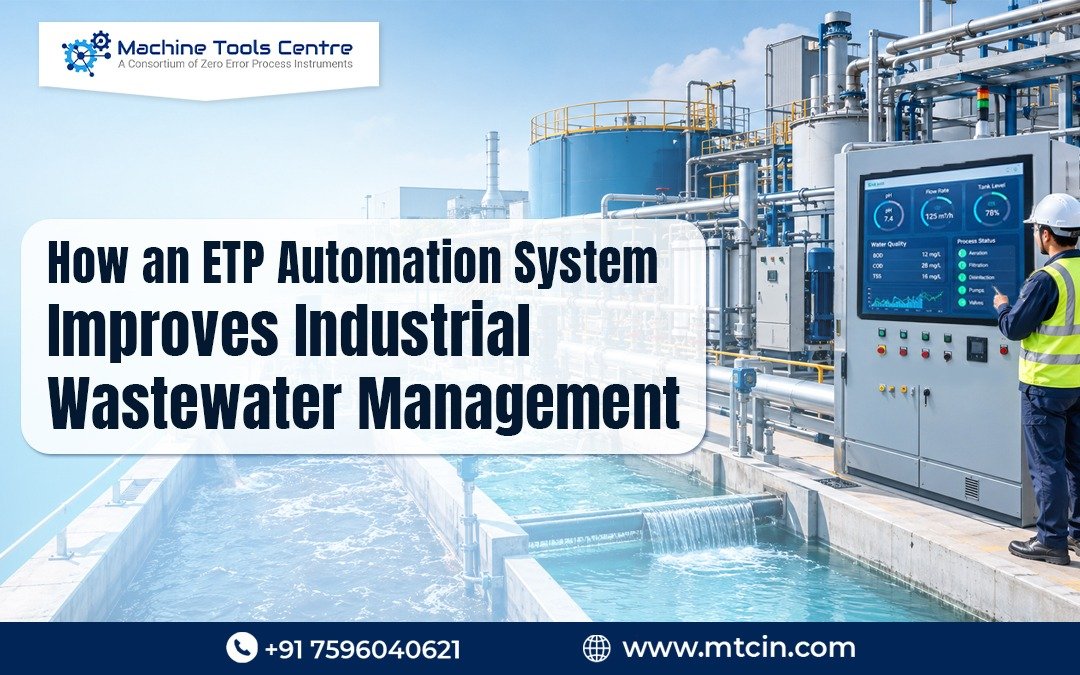
Industrial facilities generate wastewater through manufacturing, cleaning, processing, and other operations. Proper treatment is necessary before wastewater is discharged or reused. As treatment plants become more complex, relying entirely on manual monitoring and control can make consistent operation challenging.
An ETP automation system helps address this challenge by combining process instrumentation, automated controls, sensors, and monitoring technologies. It provides operators with better visibility into treatment processes while reducing the need for repetitive manual intervention.
What Is ETP Automation?
ETP automation refers to the use of automated technologies to monitor and control an Effluent Treatment Plant. An ETP automation system can collect real-time information from different stages of the treatment process and use that information for monitoring, control, and operational decision-making.
Depending on the plant design, parameters such as the following can be measured continuously:
- pH levels
- Flow rate
- Pressure
- Tank and process levels
- Dissolved oxygen
- Temperature
- Other critical process parameters
This provides operators with a clearer understanding of what is happening inside the treatment plant.
Importance of ETP Process Instrumentation
Accurate measurement is a fundamental part of wastewater treatment automation. ETP process instrumentation includes sensors, transmitters, analyzers, controllers, and other measurement devices used throughout the treatment process.
For example, pH instruments can help monitor chemical conditions, while flow instruments provide information about the movement of wastewater through different treatment stages. Level instruments can help monitor tanks and prevent undesirable operating conditions.
Key instrumentation used in an ETP may include:
- pH instruments: Monitor acidity and alkalinity levels.
- Flow instruments: Measure wastewater movement through different stages.
- Level instruments: Monitor the level of wastewater in tanks and vessels.
- Pressure instruments: Monitor pressure conditions in relevant processes.
- Process analyzers: Provide information about specific water quality parameters.
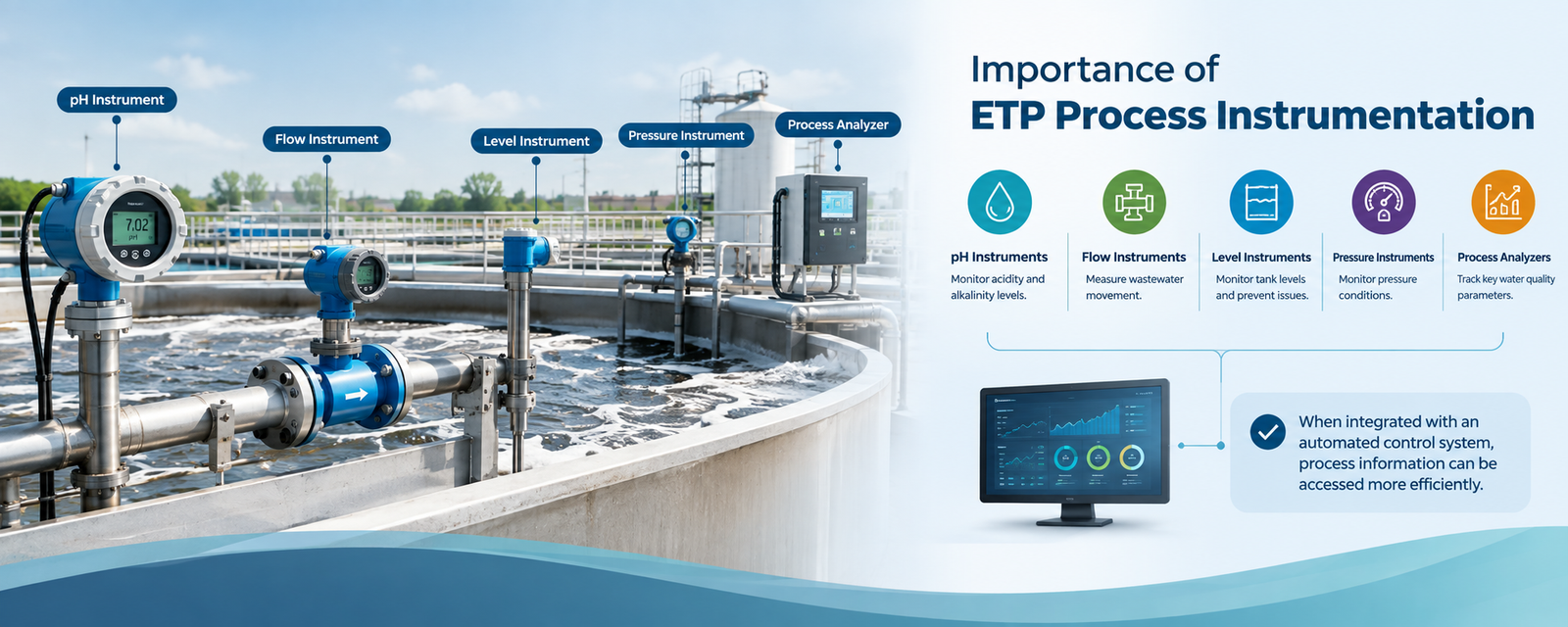 When these instruments are integrated into an automated control system, process information can be accessed more efficiently.
How an ETP Automation System Improves Operations
1. Continuous Process Monitoring
One of the key benefits of automation is continuous monitoring. An ETP monitoring system can provide operators with real-time information about important process parameters.
Instead of manually checking every parameter at regular intervals, operators can monitor multiple measurements from a centralized interface.
This can make it easier to:
- Identify unusual readings
- Detect process deviations
- Monitor equipment conditions
- Review important parameters in real time
- Respond to changes more quickly
2. Consistent Process Control
Wastewater treatment involves multiple stages that need to operate under appropriate conditions. Manual adjustments can sometimes lead to variations in process performance.
With ETP automation, control logic can be used to manage equipment such as:
- Pumps
- Valves
- Dosing systems
- Blowers
- Agitators
- Other automated equipment
This can help maintain more consistent operating conditions across different stages of the treatment process.
3. Reduced Manual Intervention
Automating repetitive activities can reduce the amount of routine manual work required from operators. Instead of constantly checking individual instruments and equipment, operators can supervise the overall system through a centralized control platform.
This allows greater focus on:
- Process supervision
- Equipment maintenance
- Troubleshooting
- Performance monitoring
- Operational improvements
Role of Industrial ETP Instrumentation
Industrial ETP instrumentation must be selected according to the wastewater characteristics and treatment process. Different industries can have different wastewater compositions, operating conditions, and measurement requirements.
Proper instrument selection and installation can improve the reliability of process data. Regular calibration and maintenance are equally important for ensuring that measurements remain dependable.
Important factors to consider when selecting instrumentation include:
- Process conditions
- Measurement range
- Required accuracy
- Wastewater characteristics
- Installation environment
- Maintenance requirements
- Compatibility with the automation system
Reliable instrumentation also helps operators identify changes in process conditions before they develop into larger operational problems.
Using Data for Better Decisions
Modern ETPs can generate significant amounts of operational data. An automated system can organize this information and make it easier for plant teams to review process performance.
An integrated ETP monitoring system can provide features such as:
- Real-time process displays
- Parameter monitoring
- Alarm notifications
- Historical data
- Process reports
- Equipment status information
Historical data can help identify recurring variations, evaluate equipment performance, support maintenance planning, and understand changes in treatment conditions.
Choosing the Right Automation Solution
Successful ETP automation requires more than simply installing sensors and controllers. The automation architecture should be designed according to the plant’s treatment stages, instrumentation requirements, equipment, and control philosophy.
A well-designed system should provide effective integration between:
Field Instruments → Controllers → Automation System → Monitoring Interface
Proper integration between these components is important for creating a reliable automated operation.
For industrial instrumentation and automation requirements, businesses can explore the solutions and expertise available through MTC Machine Tool Centre at mtc.
Conclusion
An ETP automation system brings measurement, monitoring, and control together to improve the management of industrial wastewater treatment. Continuous process monitoring can provide better operational visibility, while automated control can reduce repetitive manual intervention and support more consistent process conditions.
The major advantages include:
- Better process visibility
- Continuous monitoring
- More consistent control
- Reduced manual intervention
- Improved access to operational data
- Easier identification of process deviations
As industries continue to focus on efficient wastewater management, technologies such as ETP automation, ETP process instrumentation, industrial ETP instrumentation, and advanced ETP monitoring systems are becoming increasingly valuable for modern treatment facilities.

