
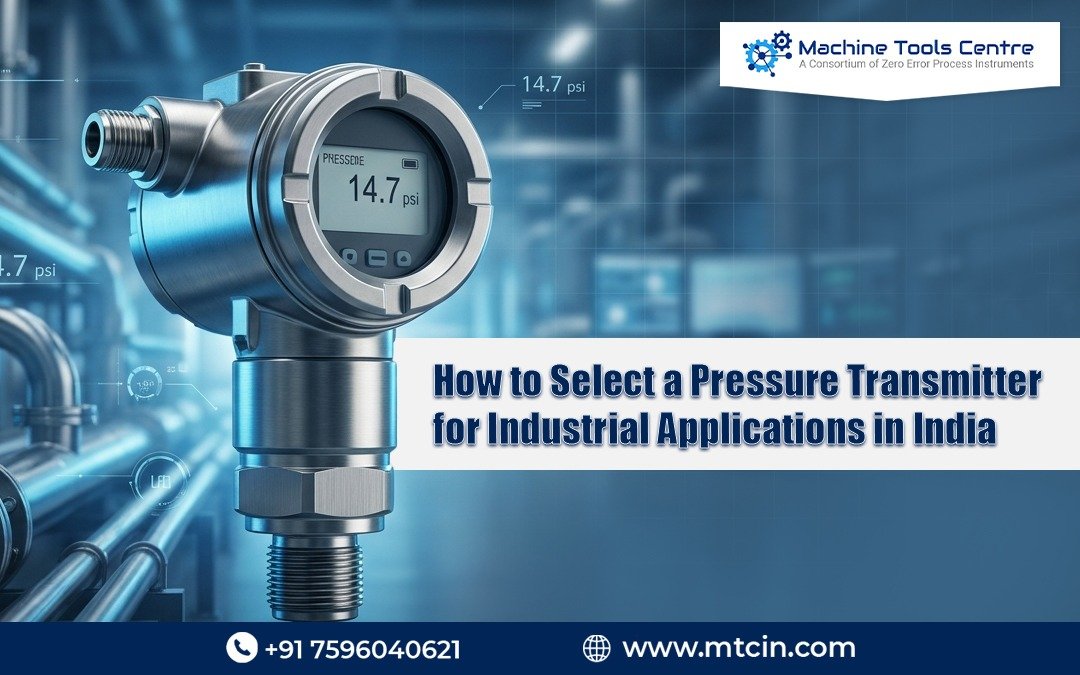
When we work with industrial systems, one thing we cannot ignore is pressure. Whether it is water line, oil pipeline, steam, or chemicals, pressure needs to be measured properly. If we choose the wrong pressure transmitter, it can create wrong readings, safety issues, and even downtime.
At Machine Tool Centre, we often see customers confused while selecting the right transmitter. There are too many options, specs, and technical words. So here we are explaining it in a very easy way, based on our real experience working with industries.
First, what is a Pressure Transmitter?
A pressure transmitter is a device that measures pressure and converts it into an electrical signal. This signal is then used by PLC, SCADA, or control systems.
In simple words, It tells your system how much pressure is inside a pipe or tank
Why is selecting the right transmitter important?
If you select wrong:
- You may get wrong readings
- Equipment can get damaged
- Production can stop
- Maintenance costs will increase
So yes, selection is not just technical — it is business critical also.
Step-by-Step: How We Select a Pressure Transmitter
We usually follow these steps when we help our clients
1. Understand the Application
First thing we ask is:
Where will you use it?
Different industries have different needs:
- Water treatment
- Oil & gas
- Food industry
- Pharma
- Chemical plants
Example:
The food industry needs a hygienic type, while chemical plants need corrosion-resistant material
2. Pressure Range
This is very important. Always choose a transmitter where your working pressure is between 30% to 70% of the full range
Example:
- If your system pressure is 10 bar
- Then select the transmitter in the 16–25 bar range
If you choose too small → damage. If too big → low accuracy
3. Type of Pressure
Many people miss this point.
There are mainly 3 types:
- Gauge Pressure – measures pressure vs atmosphere
- Absolute Pressure – measures from vacuum
- Differential Pressure – measures the difference between two points
Choose based on your process, not randomly
4. Media Type (Very Important)
What fluid is inside?
- Water
- Oil
- Gas
- Steam
- Chemicals
If the chemical is corrosive → you need SS316 or a special diaphragm
If sticky fluid → you may need a flush diaphragm type. We have seen cases where the wrong material was used, and the sensor got damaged in a few days.
5. Temperature Conditions
Check the temperature of:
- Process
- Environment
High temperature?
You may need:
- Cooling element
- Capillary type
- Remote seal
A normal transmitter cannot handle very high temperatures directly.
6. Output Signal
Most common:
- 4–20 mA (industry standard)
- HART communication (for smart control)
Make sure it is compatible with your system.
7. Accuracy Requirement
Not all applications need very high accuracy.
- General industry → 0.5% is fine
- Critical process → 0.25% or better
Higher accuracy = higher cost
So choose wisely.
8. Mounting Type
Check how you will install:
- Thread type (BSP/NPT)
- Flange type
- Clamp type (for pharma/food)
Wrong connection = leakage problem
9. IP Rating & Environment
In India, many sites have:
- Dust
- Moisture
- Outdoor conditions
Minimum IP65 recommended
For harsh areas → IP67 or higher
10. Certification & Safety
For hazardous areas (like oil & gas):
- ATEX
- Flameproof
Do not ignore safety certifications.
Quick Selection Table
| Parameter | What to Check | Simple Tip |
| Application | Industry type | Food, chemical, water all different |
| Pressure Range | Min & max pressure | Keep working in mid range |
| Pressure Type | Gauge / Absolute / Differential | Based on use |
| Media | Liquid / Gas / Chemical | Check compatibility |
| Temperature | Process temp | Use cooling if high |
| Output | 4-20 mA / HART | Match with system |
| Accuracy | Required level | Don’t overpay |
| Mounting | Thread / Flange | Fit properly |
| Protection | IP rating | IP65 minimum |
| Safety | Hazardous area? | Use certified |
Common Mistakes We See (Real Experience)
Honestly, many people make these mistakes:
- Selecting only based on price
- Ignoring temperature
- Not checking media compatibility
- Choosing the wrong pressure range
- No proper installation
And later they say “transmitter kharab ho gaya” — but actually the selection was wrong.
How Machine Tool Centre Helps You
At Machine Tool Centre, we don’t just sell products. We help you select the right solution.
What we do:
- Understand your application properly
- Suggest a correct model (not over-spec, not under-spec)
- Provide genuine and reliable brands
- Support in installation guidance
- Help in after-sales also
We have worked with many industries, so we know what works in real conditions — not just in a catalog.
Small Practical Example
One of our clients in a chemical plant selected a normal transmitter for acidic fluid. Within 10 days, the sensor got damaged.
Then we suggested:
- SS316L diaphragm
- Proper sealing
After that, the same application has been running fine till now. So yes, a small selection change can save a high cost.
Conclusion
Selecting a pressure transmitter is not very difficult… but yes, it needs proper understanding.
Just remember:
- Don’t rush
- Don’t choose the cheapest blindly
- Think about long-term use
If you are still confused, you can always connect with us at Machine Tool Centre. We will guide you in a simple way, without making things complicated.

